MEDICAL GAMING
PRESENTATION
Explaining the design principles behind the creation of a medical video game
A presentation designed to make the principles of medical game design accessible to a broad audience. Starting from discussions with Mathieu Lagadec, I structured the content into a visual narrative built around the tensions between medicine and game design.
NARRATIVE & VISUAL DESIGN
MEDICAL GAMING
PRESENTATION
Explaining the design principles behind the creation of a medical video game
A presentation designed to make the principles of medical game design accessible to a broad audience. Starting from discussions with Mathieu Lagadec, I structured the content into a visual narrative built around the tensions between medicine and game design.
NARRATIVE & VISUAL DESIGN
MEDICAL GAMING
PRESENTATION
Explaining the design principles behind the creation of a medical video game
A presentation designed to make the principles of medical game design accessible to a broad audience. Starting from discussions with Mathieu Lagadec, I structured the content into a visual narrative built around the tensions between medicine and game design.
NARRATIVE & VISUAL DESIGN

WHAT IS A MEDICAL VIDEO GAME?
A medical game is more than a game with a medical theme. It uses game mechanics, interaction and storytelling to help players understand, practise, experience or engage with something related to medicine and healthcare.
WHAT IS A MEDICAL VIDEO GAME?
A medical game is more than a game with a medical theme. It uses game mechanics, interaction and storytelling to help players understand, practise, experience or engage with something related to medicine and healthcare.
THE DESIGN CHALLENGE
Medical game design brings together two distinct disciplines: medicine and game design. Each comes with its own objectives, language, methodologies and constraints. In other words, from a medical and a game design perspective, “good” can mean two very different things.

THE DESIGN CHALLENGE
Medical game design brings together two distinct disciplines: medicine and game design. Each comes with its own objectives, language, methodologies and constraints. In other words, from a medical and a game design perspective, “good” can mean two very different things.
THE DESIGN CHALLENGE
Medical game design brings together two distinct disciplines: medicine and game design. Each comes with its own objectives, language, methodologies and constraints. In other words, from a medical and a game design perspective, “good” can mean two very different things.
THE TWO TRAPS
There are two easy ways to make a medical game fail.
THE TWO TRAPS
There are two easy ways to make a medical game fail.
MEDICAL FIRST
Start with an existing medical protocol, assessment or intervention and turn it into a digital experience. The medical purpose may be well defined, but if the experience is tiresome, the intended outcome can be compromised. Patient experience is therefore key to success.

MEDICAL FIRST
Start with an existing medical protocol, assessment or intervention and turn it into a digital experience. The medical purpose may be well defined, but if the experience is tiresome, the intended outcome can be compromised. Patient experience is therefore key to success.
MEDICAL FIRST
Start with an existing medical protocol, assessment or intervention and turn it into a digital experience. The medical purpose may be well defined, but if the experience is tiresome, the intended outcome can be compromised. Patient experience is therefore key to success.
GAME FIRST
Create a game and attach a medical promise to it without grounding the experience in medical evidence or developing it with qualified professionals. The game may be engaging, but its claimed health benefits remain disconnected from the design process that should support them.

GAME FIRST
Create a game and attach a medical promise to it without grounding the experience in medical evidence or developing it with qualified professionals. The game may be engaging, but its claimed health benefits remain disconnected from the design process that should support them.
GAME FIRST
Create a game and attach a medical promise to it without grounding the experience in medical evidence or developing it with qualified professionals. The game may be engaging, but its claimed health benefits remain disconnected from the design process that should support them.
A good medical video game emerges between two logics — finding where they can support, challenge and ultimately strengthen one another.
A good medical video game emerges between two logics — finding where they can support, challenge and ultimately strengthen one another.
BREAKING DOWN THE DESIGN
BREAKING DOWN THE DESIGN
PATIENT vs PLAYER
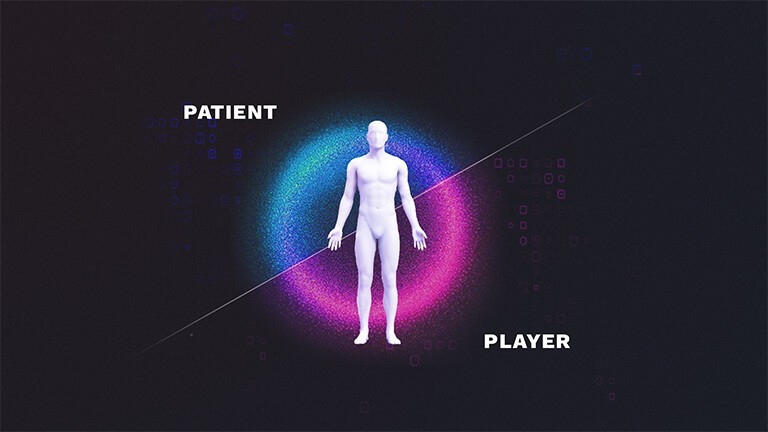
The target is both a patient and a player. The patient is defined by a medical condition, a therapeutic context and specific needs; the player expects agency, clarity, challenge and a meaningful experience.
PATIENT vs PLAYER
The target is both a patient and a player. The patient is defined by a medical condition, a therapeutic context and specific needs; the player expects agency, clarity, challenge and a meaningful experience.
PATIENT vs PLAYER
The target is both a patient and a player. The patient is defined by a medical condition, a therapeutic context and specific needs; the player expects agency, clarity, challenge and a meaningful experience.
PURPOSE vs PLAYABILITY
Every medical game has a defined purpose: teaching a concept, training a skill, supporting a therapeutic process, or collecting meaningful information. Playability determines whether the player understands the rules, knows what to do, receives meaningful feedback and remains engaged with the experience. The aim is to design mechanics in which playing the game contributes directly to achieving that objective.

PURPOSE vs PLAYABILITY
Every medical game has a defined purpose: teaching a concept, training a skill, supporting a therapeutic process, or collecting meaningful information. Playability determines whether the player understands the rules, knows what to do, receives meaningful feedback and remains engaged with the experience. The aim is to design mechanics in which playing the game contributes directly to achieving that objective.
PURPOSE vs PLAYABILITY
Every medical game has a defined purpose: teaching a concept, training a skill, supporting a therapeutic process, or collecting meaningful information. Playability determines whether the player understands the rules, knows what to do, receives meaningful feedback and remains engaged with the experience. The aim is to design mechanics in which playing the game contributes directly to achieving that objective.
ACCURACY vs ABSTRACTION
Medical subjects often involve complex processes, technical terminology and precise scientific information. Game design relies on abstraction: simplifying systems, translating invisible processes into visible interactions, and sometimes exaggerating or transforming reality to make it understandable and playable. The aim is to determine what must remain medically accurate, what can be simplified, and where abstraction can actually create a clearer understanding of the underlying phenomenon.

ACCURACY vs ABSTRACTION
Medical subjects often involve complex processes, technical terminology and precise scientific information. Game design relies on abstraction: simplifying systems, translating invisible processes into visible interactions, and sometimes exaggerating or transforming reality to make it understandable and playable. The aim is to determine what must remain medically accurate, what can be simplified, and where abstraction can actually create a clearer understanding of the underlying phenomenon.
ACCURACY vs ABSTRACTION
Medical subjects often involve complex processes, technical terminology and precise scientific information. Game design relies on abstraction: simplifying systems, translating invisible processes into visible interactions, and sometimes exaggerating or transforming reality to make it understandable and playable. The aim is to determine what must remain medically accurate, what can be simplified, and where abstraction can actually create a clearer understanding of the underlying phenomenon.
EVIDENCE vs EXPERIENCE
Medical and game design teams learn through different forms of evidence and experience. Medical practice relies on rigorous protocols and long validation cycles. Game design learns through making and observing. Prototypes are built, tested and iterated on short cycles. The aim is to bring these two approaches into the same design process without losing the rigour of one or the iterative nature of the other.

EVIDENCE vs EXPERIENCE
Medical and game design teams learn through different forms of evidence and experience. Medical practice relies on rigorous protocols and long validation cycles. Game design learns through making and observing. Prototypes are built, tested and iterated on short cycles. The aim is to bring these two approaches into the same design process without losing the rigour of one or the iterative nature of the other.
EVIDENCE vs EXPERIENCE
Medical and game design teams learn through different forms of evidence and experience. Medical practice relies on rigorous protocols and long validation cycles. Game design learns through making and observing. Prototypes are built, tested and iterated on short cycles. The aim is to bring these two approaches into the same design process without losing the rigour of one or the iterative nature of the other.
CONSTRAINTS vs CREATIVITY
Medical games operate within strict constraints: clinical requirements, ethical considerations, accessibility, validation processes... Which the design process integrates as creative material. By examining each parameter from different perspectives and looking for unexpected connections between them, new mechanics and interaction models emerge.

CONSTRAINTS vs CREATIVITY
Medical games operate within strict constraints: clinical requirements, ethical considerations, accessibility, validation processes... Which the design process integrates as creative material. By examining each parameter from different perspectives and looking for unexpected connections between them, new mechanics and interaction models emerge.
CONSTRAINTS vs CREATIVITY
Medical games operate within strict constraints: clinical requirements, ethical considerations, accessibility, validation processes... Which the design process integrates as creative material. By examining each parameter from different perspectives and looking for unexpected connections between them, new mechanics and interaction models emerge.
It is from these tensions that the most interesting solutions emerge. Constraints, purpose and experience have to come together to create something neither discipline could have produced alone.
It is from these tensions that the most interesting solutions emerge. Constraints, purpose and experience have to come together to create something neither discipline could have produced alone.
30 YEARS OF PLAY
By structuring the presentation around the tensions between medicine and game design, the project turned a complex discussion into a clear visual and narrative system.
NARRATIVE & VISUAL DESIGNER
By structuring the presentation around the tensions between medicine and game design, the project turned a complex discussion into a clear visual and narrative system.
NARRATIVE & VISUAL DESIGNER
© 2026 LAURA ERBACHER